More than two decades have passed since Tommy Vercetti first walked the streets of Vice City in 2002. In Grand Theft Auto VI, Rockstar Games has not limited itself to reimagining that classic: it has built a hyper-realistic, living and technologically avant-garde city designed exclusively for the power of PlayStation 5 and Xbox Series X|S.
Below, we review all the confirmed and technical details about what the metropolis that Lucia and Jason will traverse will be like.
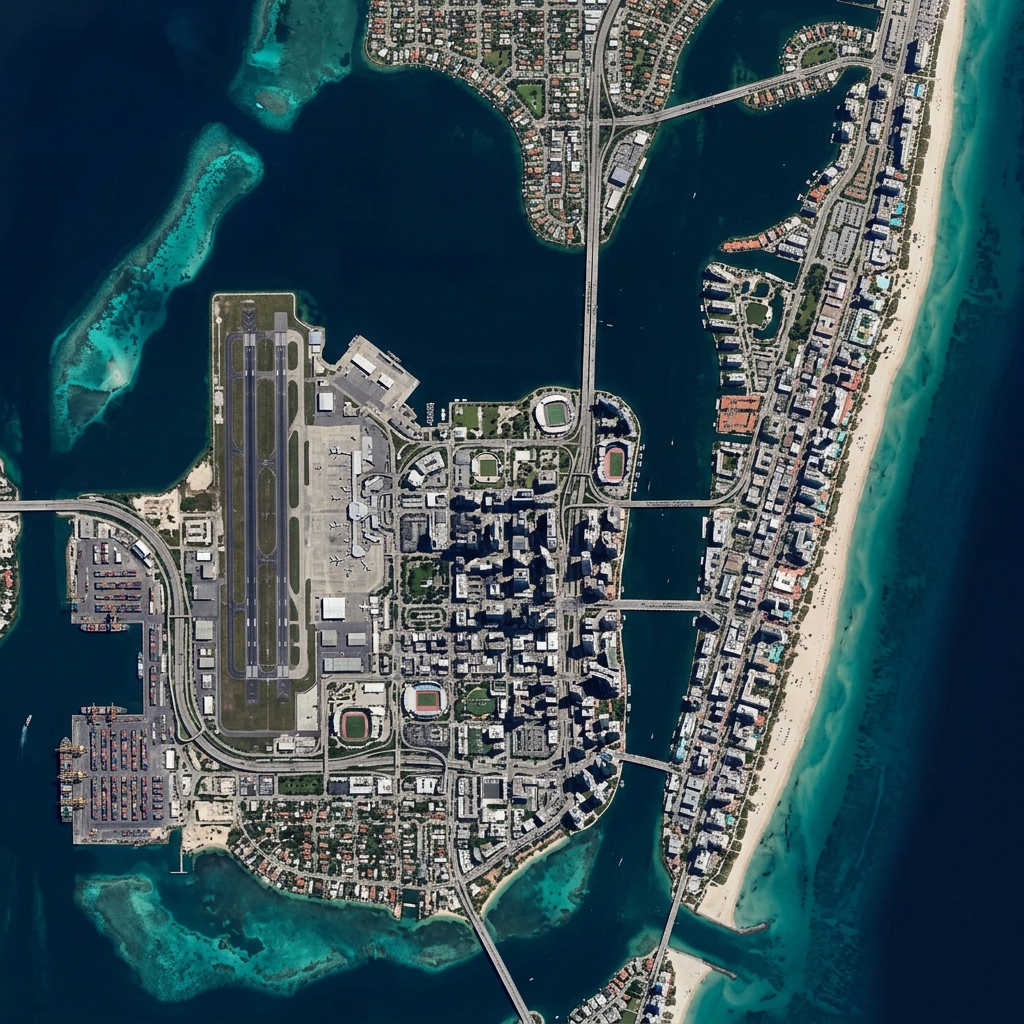
1. From the 80s to the contemporary era: the evolution of the city
The Vice City of 1986 was a tribute to the aesthetics of Miami Vice and Scarface, characterized by low-resolution palm trees and rectangular streets. The version of GTA VI, set in the present day, reflects the complexity of modern Florida:
- Financial District (Downtown): Hyper-detailed glass skyscrapers with plant-lit offices, rooftop helipads and heavy traffic at street level.
- Ocean Drive and Ocean Beach: The epicenter of the culture of posing, social media, tuned sports cars and restored Art Deco hotels.
- Multicultural Neighborhoods: Areas like Little Haiti bring worn textures, hand-painted murals, mechanic shops and street markets.
To follow the publication schedule and not miss any updates on the title’s release, check out the official GTA 6 release date on our countdown.
2. Explorable interiors: the end of closed facades
One of the historical criticisms of open worlds has been the presence of buildings that act as mere empty boxes. The material published by Rockstar shows Jason and Lucia entering and leaving interiors without visible loading screens, which points to a major leap in this area.
It should be clarified: Rockstar has not publicly detailed what proportion of buildings are accessible or how the system works technically. What has been seen in the Extended Look are interiors integrated into the game flow. These are the types of spaces that appear:
- Malls and Galleries: Multi-space complexes where players can access clothing stores, jewelry stores, restaurants and underground parking lots.
- Nightclubs and Leisure: Venues like the renovated Malibu Club or strip clubs with surround sound systems, hundreds of NPCs dancing and interactive strobe lighting.
- Safehouses and motels: Rentable rooms with functional balconies that allow you to observe traffic in real time without camera cuts.
3. Innovations of the next-generation RAGE engine
The architecture of Vice City makes the most of current hardware through:
- Water and ocean swell physics: The interaction between speedboats, jet skis and the waves on the east coast reacts to the direction of the wind and the depth of the seabed.
- Extreme climate simulation: Dynamic tropical storms and hurricanes that flood low-lying avenues, bend palm trees and force pedestrians to seek shelter under arcades.
- Traffic and crowd AI: Each passerby has an independent behavior model with short-term event memory.
If you are considering acquiring the collector’s edition with a fold-out physical map or the advantages of digital reservation, take a look at the analysis in GTA 6 Price on the Collector’s Edition.
3. The districts that have been seen
The published material allows identifying several areas of the city, although Rockstar has not published a labeled map of neighborhoods:
- Ocean Beach. The tourist waterfront, with its promenade, its art deco hotels and beach life. It is the iconic image of Vice City and the one that appears most in promotional material.
- Downtown. The financial district, with the skyscrapers that define the city’s skyline from the water.
- Starfish Island. The luxury residential enclave, with mansions and private moorings.
- Little Haiti. A neighborhood with its own cultural identity, direct heir to the homonymous area of the 2002 Vice City and with a real reference in present-day Miami.
- The port area. The industrial and cargo area, the reverse of the glamour of the coast.
That combination —luxury, tourism, working-class neighborhood and industry in a few kilometers— is exactly the structure of real Miami, and it is what allows the city to change character so quickly when moving around.
4. The technical leap compared to the Vice City of 2002
Comparing both cities helps to size the change:
| Vice City (2002) | Vice City (GTA VI) | |
|---|---|---|
| Generation | PlayStation 2 | PS5 and Xbox Series X|S |
| Interiors | Very few, with loading | Integrated into the world |
| Pedestrian density | Dozens | Simultaneous crowd |
| Day/night cycle and weather | Basic | Dynamic meteorology |
| Performance | 30 FPS | 30 FPS confirmed |
The last point deserves attention: despite the two decades of difference, the frame rate target remains the same. Rob Nelson, co-director of Rockstar North, has confirmed that GTA VI runs at 30 FPS on consoles. All the technical margin gained has been invested in density and detail, not in fluidity.
5. What is not confirmed
For the sake of rigor, it is worth separating what has been seen from what is taken for granted:
- How many buildings are accessible in the city as a whole.
- The exact limits of each neighborhood and their full official names.
- Which establishments are functional and which are decorative.
- If the city changes throughout the campaign.
6. Explore the coordinates of every corner
You can check the exact locations of neighborhoods, airstrips and nightclubs directly on our interactive Leonida map or review the first tactical tips in the GTA 6 guides section.